



Posted on the 15th June 2026 in PHTM News
GLASGOW TO REMOVE FIRE EXTINGUISHERS FROM PRIVATE HIRE CARS AND TAXIS

Glasgow City Council is set to scrap a decades-old rule forcing taxi and private hire drivers to carry fire extinguishers. This follows a campaign by the Scottish Private Hire Association (SPHA) highlighting that the requirements actually pose safety risks.
The change is part of a major overhaul of Glasgow’s taxi and private hire licensing conditions. However, while the wider policy review introduces sweeping updates across the sector, it is the removal of the mandatory fire extinguishers that marks a major victory for trade reformers who have fought for years to align Scottish licensing with modern safety standards.
For years, local authorities across Scotland have universally mandated that licensed vehicles carry fire fighting equipment. The SPHA has long argued that this requirement is not only fundamentally flawed but introduces unnecessary risks to drivers and the travelling public alike.
"Get Out, Stay Out, Call 999"
The driving force behind the policy change is a push to replace outdated rules with evidence-based safety practices. Under current guidelines from national fire bodies, drivers without firefighting training are actively discouraged from attempting to tackle vehicle blazes.
Eddie Grice, General Secretary of the SPHA, welcomed the shift in perspective, stating: "The primary purpose of an extinguisher in a vehicle should only ever be as an aid to escape, not as a tool to fight a fire. In practice, forcing an untrained driver to tackle a vehicle fire is minimal in benefit and maximum in risk. National safety guidance is explicit by saying if a vehicle catches fire, you get the occupants out quickly and to a safe place. You do not open the bonnet and you do not attempt to extinguish an engine fire yourself. The instruction is simple. Get out, stay out, and call 999."
The SPHA’s campaign has heavily relied on aligning Scottish practices with evolving UK standards. In England, major licensing authorities, such as Southampton and Milton Keynes, have recently dismantled their extinguisher requirements. This followed clear warnings from insurance bodies that claims could be invalidated if an amateur attempted to fight a fire, alongside updated Best Practice Guidance from the Department for Transport (DfT) and the National Fire Chiefs Council (NFCC).
Beyond the immediate fire risks, the physical requirement to carry the equipment has caused practical issues for operators. Securing heavy extinguishers often forces vehicle owners to drill directly into fascia panels, bulkheads, or frames. The SPHA pointed out that this structural modification causes permanent damage to the vehicle and risks puncturing hidden wiring or vital electrical systems.
A National Campaign for Uniformity:
While Glasgow’s decision marks a watershed moment, the SPHA emphasises that this is part of a much larger, coordinated effort spanning multiple local authorities and national legislative discussions. "Eliminating this flawed requirement incrementally, authority by authority, is an incredibly impractical way to manage a transport sector," Grice explained. "Unless all councils act simultaneously, we simply create a patchwork of inconsistent rules. That is why the SPHA has been pushing this issue not just in individual committee rooms, but at the national legislative level.
"We are campaigning for fully unified national vehicle standards to guarantee regulatory consistency and safety across the entirety of Scotland."
Overhauling Outdated Conditions
The removal of the extinguishers forms part of a broader modernisation of Glasgow's licensing regime. At meetings held in late 2025 and early 2026, the council's Licensing Section established dedicated Working Groups to completely review conditions that had sat untouched for a decade and a half.
The SPHA was heavily involved throughout this process, securing a seat on the Private Hire Car Working Group alongside council enforcement officers, Police Scotland and select trade representatives to meticulously draft the new framework.
Following a series of summits in the City Chambers between February and April 2026, a comprehensive list of revised conditions was generated. Beyond the fire extinguisher deletion, the secondary updates to the licensing conditions include updates to vehicle operator minimum ages, the use of CCTV, installing protective screens in private hire cars, conditions on vehicle modifications and streamlining rules on taximeters in PHCs.
The final draft of revised conditions was issued to the working groups late last month, with no further amendments sought by the trade. Glasgow City Council's Licensing and Regulatory Committee approved the changes on 10 June 2026 and they will take effect on 1st September.
For the SPHA, however, the successful removal of the fire extinguisher rule serves as a powerful precedent for what targeted, legally-grounded trade representation can achieve for driver safety. Mr Grice concluded: "The campaign continues. We hope to see this same change now take place around the country and our association will continue working to achieve moves towards greater uniformity of standards across the board".
Read another story
- DIAL A CAB RUGBY PARTNERS WITH TAKE ME TO DRIVE GROWTH, OVERCOME INDUSTRY REGULATIONS AND SCALE OPERATIONS

By joining forces, Dial A Cab will leverage TAKE ME’s extensive, scaled resources to inject new technology, drivers, and corporate accounts into the local area.

- ADCU ACCUSES TFL OF ABANDONING DRIVERS AS UBER AND WAYVE FAST TRACK AV ROLLOUT IN LONDON
ADCU has accused TfL of "shrugging shoulders' and abandoning drivers as Uber and Wayve fast-track autonomous vehicle rollout in London.
- UK TAX AUTHORITY WINS APPEAL IN DISPUTE WITH BOLT WHICH COULD AFFECT UBER

Britain's tax authority on Friday won an appeal in a dispute with Estonian ride-hailing and food delivery company Bolt, a ruling that could affect rival Uber's similar case worth over £1 billion.
- BRADFORD ROAD SAFETY CRACKDOWN HITS LAWBREAKING DRIVERS AND SUSPENDS TAXI LICENCES

West Yorkshire Police teamed up with Bradford Council for the high-visibility action day, aiming to boost road safety and ensure driver compliance across the city.
- WALSALL COUNCIL TIGHTENS TAXI SAFETY STANDARDS WITH EXPERT WHEELCHAIR TRAINING
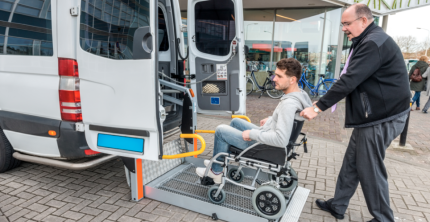
Walsall Council has launched a targeted safety initiative to make local taxi journeys more inclusive and secure by giving its community protection team specialist wheelchair transport safety training.
- KINGS LYNN HACKNEY DRIVERS STRUGGLE TO COMPETE AS RISE IN LOCAL UBERS DEEPENS INDUSTRY CRISIS

The driver claims local operators cannot compete fairly against the global ride-hailing giant, which he argues avoids the same regulatory fees and oversight imposed on local businesses.
- GRANTHAM TAXI DRIVER TEAMS UP WITH AI TO LAUNCH ENGLAND FOOTBALL QUIZ GAME AHEAD OF WORLD CUP
Pawel Tokarzewski, a 36-year-old Polish native who moved to the Lincolnshire town nearly a decade ago, spent over a year developing Footy Legends Quiz.
- GLASGOW PH DRIVER FOUND GUILTY OF SEXUALLY ASSAULTING TERRIFIED SCHOOLGIRL IN SUPERMARKET CAR PARK

Farrukh Naseem Butt, 45, attacked the terrified teenager in the early hours of February 16 last year after pulling his car into a Sainsbury’s car park near Hillend, Edinburgh.
- GLASGOW PRIVATE HIRE DRIVER SUSPENDED AFTER BEING CAUGHT 'PIRATING' FOR FARES

The city’s licensing committee made the decision to suspend Muhammad Janaghir following an incident last December, acting on a complaint from the council's taxi and PH enforcement unit.
- GLASGOW TAXIS PREPARE FOR HISTORIC 79TH ANNUAL CHILDREN'S SEASIDE TRIP TO TROON
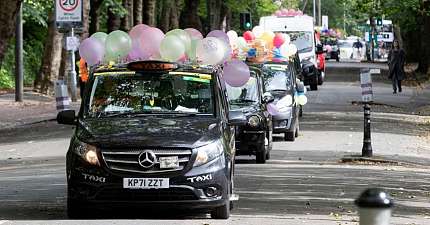
The beloved event will see a colourful convoy of more than 125 taxis transport around 300 children with additional support needs from various city schools for an unforgettable day at the beach.
- UNLICENSED CARMARTHENSHIRE DRIVER FINED OVER £2,600 FOR TAKING CHILDREN TO SCHOOL

David Rhydian Thomas, connected to Windy Corner Coaches in Carmarthenshire, used a licensed private hire vehicle to take pupils to school over a one-week period last October.
- FAREHAM BC GRANTS PH DRIVER LICENCE DESPITE PREVIOUS REVOCATION FOR PICKING UP UNBOOKED PASSENGER

The panel heard that Mr G’s former licence with Aylesbury Vale District Council was taken away in July 2019.
- BARROW CABBIE PLEDGES FREE DAY OF LIFTS IF ENGLAND WIN THE WORLD CUP
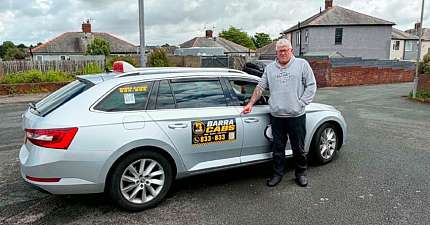
Brian White, who drives for local firm Barra Cabs, has pledged to waive all fares the day after the cup final if the Three Lions manage to bring the trophy home.
- STOCKTON TAXI LICENCES REVOKED FOLLOWING ARRESTS FOR RAPE, SEXUAL ASSAULT, AND FIREARMS OFFENCES

The annual report to Stockton Council's general licensing committee detailed 26 enforcement actions taken throughout 2025 to protect the public.
- LEEDS CABBIES STATION CHAOS AND LOST BUSINESS CONTINUES AS DROP OFF DELAYS DRAG ON

The disruption began in 2022 when the station's front entrance revamp led to the demolition of the original taxi rank and relocation to the rear of the station.
- EAST RENFREWSHIRE COUNCIL APPROVES 10% FARE INCREASE FOLLOWING TRADE REPRESENTATIONS

The increase represents the first adjustment to taxi fares in approximately three years and follows a prolonged period of rising operating costs across the industry.
- TRANSPORT COMMITTEE URGES MINISTERS TO GET TOUGH ON TAXI STANDARDS
The Committee’s report into the licensing of taxis and private hire vehicles that was published on 9 June, also calls for a “clear plan” to reduce high levels of out-of-area working.
- BRADFORD POLICE SERGEANT ADMITS TO PUNCHING AND STRANGLING CABBIE IN BRUTAL ATTACK

Sgt Edward Howard is facing the sack after pleading guilty to a violent, unprovoked assault on a taxi driver while the vehicle was moving.
- STOKE ON TRENT PRIVATE HIRE FIRM STRIPPED OF LICENCE OVER FAKE SCHOOL RUN DOCUMENTS

Just Travel Private Hire Ltd, based in Shelton, had its operator licence revoked by Stoke-on-Trent City Council after serious concerns emerged regarding the safety checks of its staff.
- DENBIGHSHIRE COUNCIL TO CONSIDER PERMANENT AGE RULE CHANGE AFTER RISE IN WAV TAXIS

In June last year, the council’s licensing committee agreed to a 12-month trial that removed age limits for wheelchair accessible vehicles.




















All content Copyright © 2026
Private Hire and Taxi Monthly Limited