



Posted on the 10th June 2026 in PHTM News
TRANSPORT COMMITTEE URGES MINISTERS TO GET TOUGH ON TAXI STANDARDS
The Transport Committee has warned the Government that its plan for national minimum standards for taxis must not mean “low by default”.
The Committee’s report into the licensing of taxis and private hire vehicles that was published on 9 June, also calls for a “clear plan” to reduce high levels of out-of-area working.
The report comes amid concern about fragmented regulation that varies from one area of the country to another. Currently there are more than 260 licensing authorities in England, each applying its own standards.
The Government announced in November 2025 that it would legislate to introduce national minimum standards for taxis and private hire vehicles, while some in the sector have called for tougher absolute national standards.
Minimum standards would establish a floor for the conditions set by every licensing authority, while preserving the ability of individual authorities to vary conditions by setting higher requirements where local circumstances warranted it.
Absolute national standards, by contrast, would impose a single set of conditions to be applied consistently by every authority, with no scope to add to or depart from them.
During its inquiry, the Committee heard arguments for both minimum standards and absolute national standards.
The Committee also heard fierce opposition to routine out-of-area working, which sees drivers obtaining their licence in one area and operating mainly in another. In its written evidence, the Blackpool Taxi Association referred to out-of-area working as "the root cause to all that's wrong".
A key concern is that this practice reduces standards by enabling 'licence shopping' - whereby drivers and operators deliberately obtain licences from an authority with less stringent requirements than the one in whose area they primarily operate.
This was highlighted by the 2025 report into group-based sexual exploitation by Baroness Louise Casey, which warned that licence shopping was undermining safeguarding efforts.
In the King’s Speech in May 2026, the Government announced its intention to further modernise the current system with measures unveiled including a national database of all licensed taxis and hire vehicles.
CHAIR COMMENT:
Transport Committee Chair Ruth Cadbury said: “Throughout our inquiry, the Transport Committee heard concerns about inconsistent taxi standards up and down the country. We also encountered deep-seated opposition to routine out-of-area working that many believe reduces standards by enabling licence shopping.
“The Committee welcomes the Government’s determination to turn this around with minimum standards, but we are clear that these standards should be high, comprehensive and consistent, with safety as absolute – both for drivers and passengers.
“Ministers should also build on the foundations they have laid with a blueprint for bringing down high levels of out-of-area working that has undermined public confidence in the sector and made enforcement harder.
“By taking tough action now, we can ensure licence shopping is disincentivised, taxis are safer and passengers get the same high standards wherever they are in the country.”
NATIONAL MINIMUM STANDARDS:
The report states: “We welcome the department’s acknowledgement that greater national consistency in licensing standards is required. However, we are not persuaded that the current plan to pursue national minimum standards will be sufficient, unless those standards are strong enough to avoid a lowest common denominator effect, and carefully specified to remove incentives for licence shopping. The department already accepts that in practice there should be an absolute standard in areas like safety.
“The government’s plan for national minimum standards must not mean low by default. The areas in which variation in standards is permitted should be minimised in order to disincentivise licence shopping, and set at a high level wherever possible to ensure consistently high-quality passenger experiences.”
OUT OF AREA WORKING:
The report states: “Out-of-area working is now a widespread feature of the taxi and private hire vehicle market. We recognise the strength of concern about its impact on standards, local accountability and public confidence. We also acknowledge that outright prohibition would be impractical.
“We urge the Department to bring forward a clear plan to curtail the extensive practice of out-of-area working and create greater incentives for drivers to license in the locality in which they operate. This will enable local licensing authorities to take enforcement action more readily, keep both drivers and passengers safe, and restore trust that has been lost across the sector.”
NPHTA COMMENT:
David Lawrie, Director of NPHTA said: "Having been a part of the inquiry, with both multiple written submissions, and an oral submission in October, We have been waiting for this with bated breath.
"It is finally out there - and WOW, what a read. Everything has been covered, 69 pages - there's just so much detail including:
• National standards alone will not be enough
• Standards must also include turnaround time (processing and issuing licences)
• Fees
• Enforcement
• NO support for any 100% WAV policies in rural areas - instead recognising the need for a reasonable proportion
• CCTV
• Ending predominant out-of-area use (cross-border working)
• Extending of NR3S to include vehicles and operators
"I can honestly say, that the vast majority of everything we said on your behalf has been taken on board!"
Click to read: https://committees.parliament.uk/.../docu.../298932/default/
Remember NPHTA, IoL, and many other stakeholders have already begun discussions with the Transport Minister Lilian Greenwood ... this time, FINALLY, it looks like change IS coming!"
Read another story
- EAST RENFREWSHIRE COUNCIL APPROVES 10% FARE INCREASE FOLLOWING TRADE REPRESENTATIONS

The increase represents the first adjustment to taxi fares in approximately three years and follows a prolonged period of rising operating costs across the industry.

- BRADFORD POLICE SERGEANT ADMITS TO PUNCHING AND STRANGLING CABBIE IN BRUTAL ATTACK

Sgt Edward Howard is facing the sack after pleading guilty to a violent, unprovoked assault on a taxi driver while the vehicle was moving.
- STOKE ON TRENT PRIVATE HIRE FIRM STRIPPED OF LICENCE OVER FAKE SCHOOL RUN DOCUMENTS

Just Travel Private Hire Ltd, based in Shelton, had its operator licence revoked by Stoke-on-Trent City Council after serious concerns emerged regarding the safety checks of its staff.
- DENBIGHSHIRE COUNCIL TO CONSIDER PERMANENT AGE RULE CHANGE AFTER RISE IN WAV TAXIS

In June last year, the council’s licensing committee agreed to a 12-month trial that removed age limits for wheelchair accessible vehicles.
- UBER AND WAYVE TO LAUNCH DRIVERLESS CABS IN LONDON THIS SUMMER AS UNIONS WARN OF MASS JOB LOSSES

Driverless taxis are set to hit London streets this summer as ride-hailing giant Uber partners with British artificial intelligence firm Wayve for a first-of-its-kind commercial rollout in the UK
- JOY AND WATER FIGHTS AS 78TH EDINBURGH TAXI DRIVERS' OUTING WELCOMES HUNDREDS OF CHILDREN
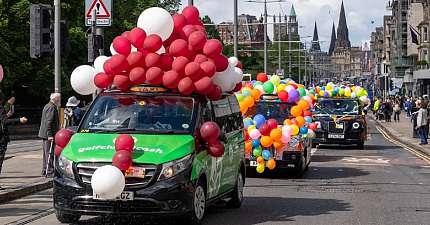
Fully funded and organised by local cabbies, the colourful convoy of vehicles decorated with floats and balloons made its way from the capital to East Lothian for a special day out.
- MAN CHARGED AND WOMAN BAILED AFTER RACIALLY AGGRAVATED ASSAULT ON CABBIE AT WESTON FESTIVAL

According to police, a male and female suspect targeted the taxi driver with racial abuse and violence.
- FALKIRK TAXI FARES SET FOR BUMP AS FUEL AND RUNNING COSTS SOAR

Under new proposals, passengers will see an extra 20p tacked onto every trip, while the running mile rate is set to climb by seven per cent, rising from £2.06 to £2.20.
- LEYLAND FIRM ISSUES STAY SAFE WARNING AFTER PASSENGERS BOARD WRONG CARS
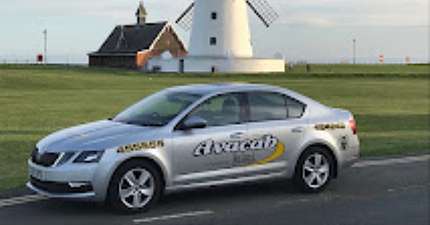
Avacab, a local firm based at Bison Place, took to social media after several customers reported booking a taxi with them, only to be collected by a different car that arrived just moments before their scheduled ride.
- MEETING MINUTES REVEAL BRISTOL CABBIES KEEP LICENCES DESPITE SERIOUS DRIVING OFFENCES
Bristol City Council is facing criticism for its lenient approach to taxi licensing after secret documents revealed drivers caught speeding, running red lights, and using mobile phones are still being allowed to transpor
- STOCKTON TIKTOK CABBIE WINS BACK LICENCE AFTER COMMITTEE PROBE INTO DRIVING VIDEOS

The driver’s licence was initially suspended following allegations that he was using a mobile phone while driving, a claim he fiercely disputed during a licensing committee meeting.
- BRADFORD HACKNEY DRIVERS WELCOME RELOCATION OF TAXI RANK AFTER THREE-YEAR WAIT
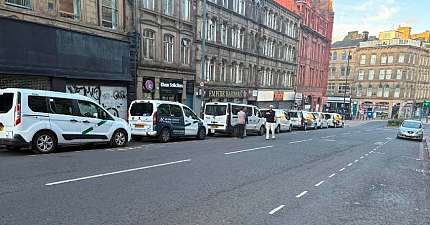
Waqas Saghir from Bradford Hackney Association with strong support from Councillor Kamran Hussain worked hard to get the rank relocation approved to the left hand side as you drive down Sunbridge Road.
- COURT UPHOLDS ASHFORD BC'S DECISION TO REVOKE PH DRIVER'S LICENCE AFTER MOBILE PHONE USAGE
Surrey Police submitted a report to the council’s Licensing Team concerning private hire driver Mehmet Kaygun, who was observed driving on the M25 while using a mobile phone for a prolonged period.
- CABBIE LOSES LICENCE AFTER BEING CAUGHT WITH DRUGS AND CRIMINAL CASH NEAR CARLISLE
Yousaf Hossain, 44, was stopped by police on the southbound side of the M6 motorway after driving to Glasgow to collect the illegal cargo.
- FORMER LIVERPOOL NAVY VET TURNED CABBIE JAILED FOR LAUNCHING STREET DEALING COCAINE OPERATION
Warren Childs, a 45-year-old father of three from West Derby, turned to class A drug dealing after accumulating around £30,000 in debt.
- BOURNEMOUTH AIRPORT PARKING FEES OUTPACE HEATHROW SPARKING OUTRAGE FROM FURIOUS CABBIES
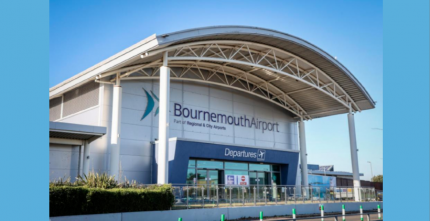
Local taxi drivers and businesses claim the sudden increase was introduced without any warning and risks driving passengers away just as the busy summer holiday season begins.
- GLASGOW PRIVATE HIRE DRIVER SUSPENDED OVER £55,000 DRUGS CHARGES

Mohammed Sajed had his PH licence stripped by the city’s licensing committee following notification from Police Scotland he had been "charged with being concerned in the supply of drugs."
- EFTA DEMANDS ANSWERS AFTER FIFE TAXI TRADE BRANDED SHOCKING WITHOUT EVIDENCE
Following comments made at this week's Regulation and Licensing Committee meeting, EFTA says councillors have chosen headline-grabbing criticism over transparency and evidence.
- ABERDEEN REJECTS UBER BACKED BID TO SCRAP KNOWLEDGE TEST DESPITE WARNINGS OF LOST BUSINESS

Aberdeen councillors have unanimously voted to keep the controversial "Street Knowledge Test" for private hire drivers. T
- BOLTON DRIVER SUSPENDED AFTER COURT FINE FOR UNINSURED VEHICLE
Bolton Council’s licensing committee noted that the driver’s actions breached the strict conditions required to hold a PH licence which gave reasonable cause to suspend him.



















All content Copyright © 2026
Private Hire and Taxi Monthly Limited