


Posted on the 2nd November 2026 in PHTM News
GOVERNMENT ANNOUNCES VAT CHANGES FOR LARGE PH & TAXI OPERATORS £50M THRESHOLD PROPOSED
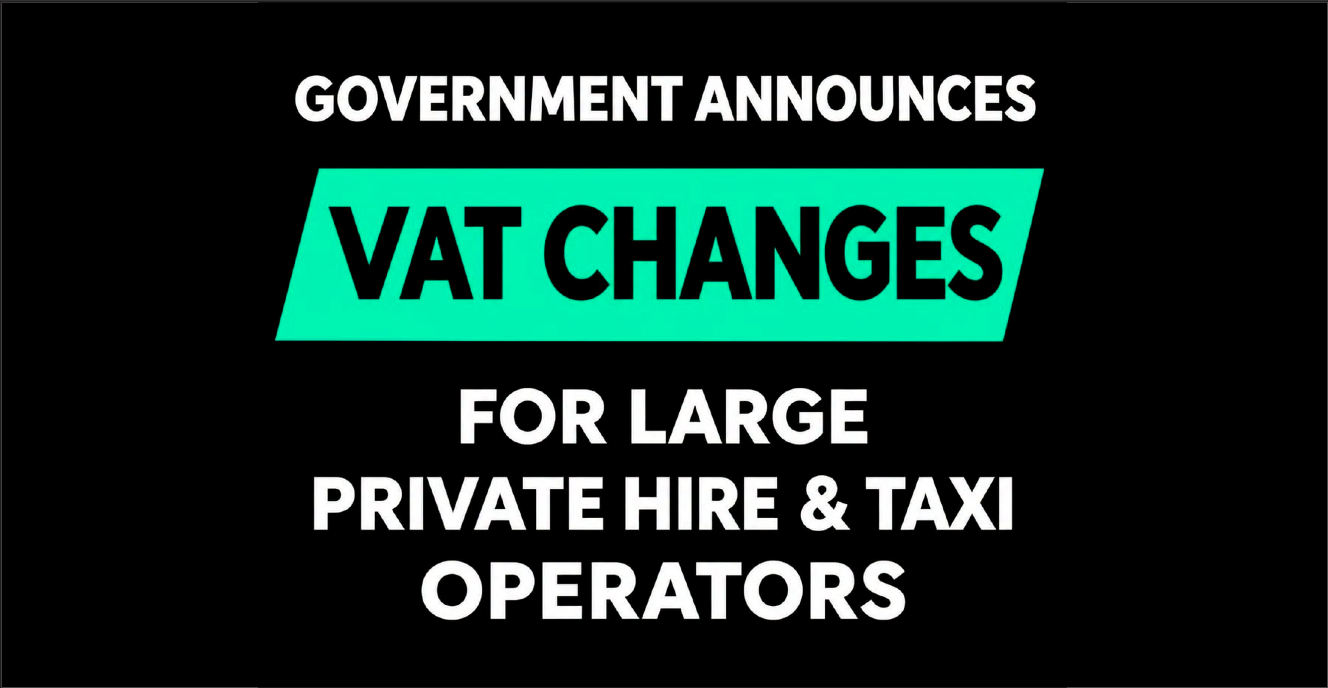
The government has announced changes to the VAT treatment of private hire fares, due to take effect from 2 January 2028.
The changes are aimed at larger operators, with the government proposing a threshold of £50 million in annual passenger fare turnover.
Importantly, smaller operators are expected to be excluded.
WHAT IS CHANGING?
Under the new rules, larger operators acting as agents for drivers will be treated as supplying the transport service themselves for VAT purposes.
This means affected VAT-registered operators will have to account for VAT on the full passenger fare, rather than just their commission or booking fee.
WHAT DOES THE £50 MILLION THRESHOLD MEAN?
The proposed threshold is based on the total value of passenger fares handled by an operator – NOT its commission, income from booking fees or profit.
For example, an operator handling £60 million in passenger fares annually could fall within the new rules, even if it retains only a small percentage as commission.
The £50 million threshold is not yet confirmed and will be subject to consultation.
WHICH OPERATORS COULD BE AFFECTED?
The changes are aimed primarily at the largest private hire and taxi businesses, potentially including major booking platforms such as Uber and Bolt, alongside large national and regional operators.
However, some larger operators already account for VAT on the full passenger fare, so the changes may have little additional impact on them.
HMRC has not confirmed which individual companies will be affected.
WHAT ABOUT SMALLER OPERATORS AND DRIVERS?
• Smaller operators below the eventual threshold will not be brought within the new rules.
• No general new VAT registration requirement is being introduced for drivers.
• Existing VAT obligations will continue to apply.
WILL PASSENGER FARES INCREASE?
Possibly. HMRC acknowledges that passengers could face higher fares if affected operators pass on additional VAT costs.
The government estimates the changes will raise £385 million in tax revenue in 2028–29.
WHAT HAPPENS NEXT?
The government will consult on the final threshold and how the legislation will operate before the planned introduction on 2 January 2028.
The key point is that this is NOT a blanket new VAT charge on all private hire operators. The government intends to target larger businesses while excluding smaller operators from the new measure.
Read another story
- NORTH NORTHANTS HACKNEY FLEET FALLS BY 21 PER CENT AS TRADE REP CALLS FOR POLICY REVIEW

A North Northants taxi trade rep is demanding answers after figures revealed that the number of licensed Hackney carriages has fallen by more than a fifth since 2022, while private hire vehicle numbers have increased by

- MAJOR TAXI ACQUISITION IN KENT AS EXPRESS CABS BUYS VOKES TAXIS

The deal further strengthens Express Cabs’ position as what the company describes as the largest independently owned taxi operator in Kent and the South East outside London.
- STOCKTON PRIVATE HIRE DRIVER HAS LICENCE REVOKED FOLLOWING CONFRONTATION WITH POLICE

According to licensing committee minutes, CCTV showed the driver arriving at the scene, getting out of his vehicle and filming officers as they struggled to detain an intoxicated woman.
- SOUTHAMPTON TAXI DRIVER LOSES LICENCE AFTER CCTV CAMERA DELIBERATELY MOVED AND OTHER COMPLAINTS
The case arose when a passenger claimed the meter showed approximately £210, but the driver demanded £300, citing a surcharge for carrying more than four passengers.
- AS ROBOTAXIS ARRIVE IN LONDON RESEARCH ROADMAP SETS OUT 65 QUESTIONS UK HAS YET TO ANSWER

IfDT publishes 65 open questions on what driverless vehicles will mean for the UK, from jobs and productivity to society and security
- DEVOLUTION LOCAL GOVERNMENT REORGANISATION MOVES FORWARD IN FIVE AREAS

Ministers have confirmed that the programme is continuing and remains aligned with the wider plans to shift power out of Westminster and back to local communities, including those announced at the Budget.
- DEVON CABBIE HAS LICENCE REVOKED OVER 'INAPPROPRIATE CONVERSATIONS' WITH YOUNG FEMALE PASSENGERS

Torbay Council's regulatory sub-committee considered four complaints received between December 2025 and August 2026, involving inappropriate comments, poor customer service and aggressive behaviour.
- BOLTON PH OPERATOR HAS TWO LICENCES REVOKED AFTER FAILING TO DECLARE CRIMINAL CONVICTION

A private hire operator responsible for a large number of vehicles has had both his operator licences revoked by Bolton Council after failing to declare a criminal conviction.
- COUNCIL CONFIRMS ADDITIONAL ENFORCEMENT AT EAST RENFREWSHIRE TAXI STANCES
East Renfrewshire Licensed Drivers’ Association has received a reply from the council following its press release highlighting the problem of unauthorised vehicles parking on taxi stances.
- SOUTH CAMBRIDGESHIRE COUNCIL LAUNCHES CONSULTATION ON PROPOSED TAXI LICENSING UPDATES

The review aims to improve passenger and driver safety by bringing local rules into line with current legislation, national guidance and industry best practice, using advice from the DfT and the IoL.
- TAXI AND PHV NUMBERS SURGE ACROSS CUMBERLAND FOLLOWING LICENSING SHAKE UP

Figures show that hackney carriages increased from 226 to 367, while private hire vehicles grew from 100 to 265 by 2025/26.
- TAXI FARES ACROSS WARWICK DISTRICT SET FOR 10 PER CENT INCREASE THIS NOVEMBER
Under the proposals, the starting charge on every tariff will increase by approximately 10 per cent, whilst per-mile and waiting charges will remain unchanged.
- TERRIFYING KNIFEPOINT ROBBERY TARGETS PRIVATE HIRE DRIVER IN BILLINGHAM
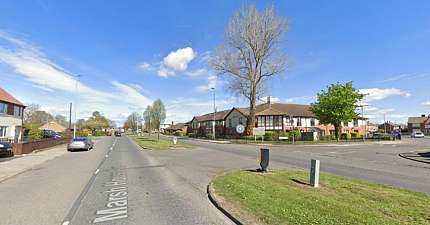
The ordeal began at around 8:15pm on Thursday, October 22, when three young men boarded a red Toyota Prius PHV in Billingham.
- SEVENOAKS TAXI FARES SET FOR 10 PER CENT HIKE AS COUNCIL VOTES ON FIRST INCREASE SINCE 2022
The proposed adjustment is the first since May 2022, with officers pointing to official government fuel price data to justify the rise.
- FAREHAM PRIVATE HIRE DRIVER RETAINS LICENCE DESPITE PAST REVOCATION OVER SEXUAL CONTACT

The panel heard that the driver had previously held a licence with Havant Borough Council, which was suspended and revoked following conduct that included sexual contact with a vulnerable passenger.
- SPEEDING STOCKPORT CABBIE BANNED AFTER 91MPH RUN ON A55

A 76-year-old cabbie has been stripped of his driving licence after failing to convince magistrates that a ban would cause him exceptional hardship.
- PROPOSED LONDON TAXI FARE REVISIONS CONSIDER DRIVER COSTS AND LONGER JOURNEY RATES
The transport authority has outlined four distinct options to help drivers cover rising expenses, maintain fair compensation,and keep taxi driving a viable career choice.
- EAST KILBRIDE TAXI FARES SET TO RISE FROM 5 NOVEMBER

Under the new tariff coming into effect on 5 November 2026, the initial charge for journeys of up to 880 yards will rise by 30p to £4.30, bringing the estimated cost of a two-mile trip to £7.50.
- ISLE OF WIGHT CABBIES COULD FACE NEW CODE OF CONDUCT

Isle of Wight Council's environment and community protection committee (ECPC) has been advised to approve a draft Hackney Carriage and Private Hire Statement of Licensing Policy 2027–2032 for a six-week consultation.
- POLICE VAN AMONG VEHICLES BLOCKING EAST RENFREWSHIRE RANK AS DRIVERS DEMAND COUNCIL ACTION
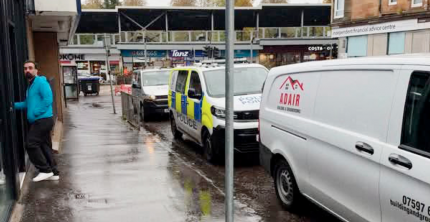
Taxi drivers in East Renfrewshire are demanding tougher parking enforcement after all four spaces at a designated taxi rank were occupied by other vehicles – including a Police Scotland van.





















All content Copyright © 2026
Private Hire and Taxi Monthly Limited